Bed Bug Eggs: Small, White, and Easy to Miss
About 1 mm long, pearl white, and glued inside seams and screw holes, bed bug eggs are easy to walk past. This guide shows where to look and why eggs change treatment.
Quick Answer
Bed bug eggs are about 1 mm long, pearl white, and oval, glued in small clusters inside seams, cracks, and screw holes. Empty shells look translucent. Because many sprays do not reliably kill eggs, finding eggs often changes the treatment plan.
What Bed Bug Eggs Actually Look Like
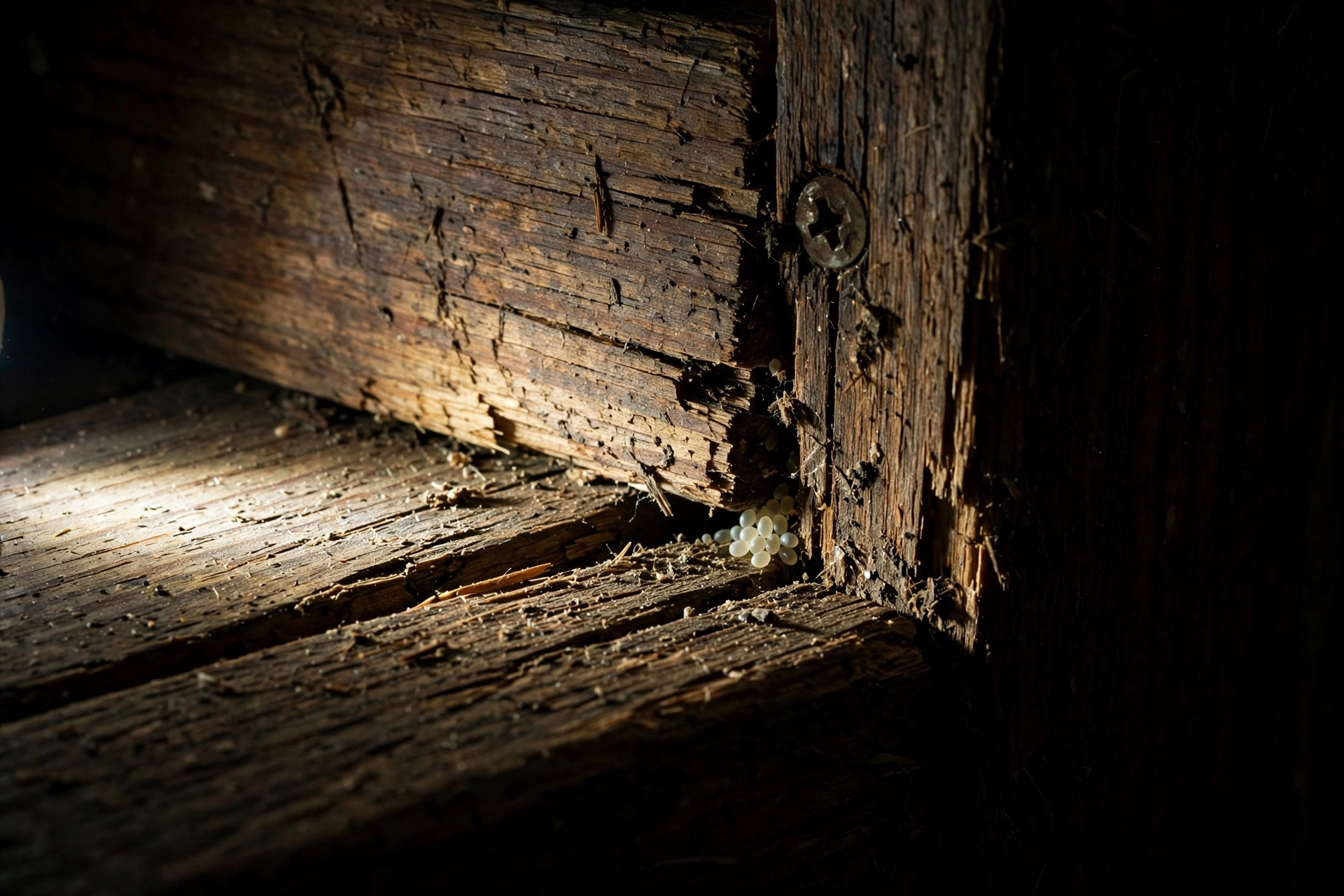
Bed bug eggs are about 1 mm long, pearl white, and oval. Females glue them in small clusters inside seams, cracks, and screw holes, hard to see without strong light. Empty shells left after hatching look translucent.
Because eggs are so small, people often walk past them while looking for adult bugs. Knowing their size, color, and favorite spots below makes a careful check far more useful.
How Many Eggs and How Fast They Hatch
A female lays a few eggs per day in protected spots, so clusters build quietly. Eggs typically hatch in about a week to ten days in warm rooms, and Naples indoor warmth keeps that cycle moving year round.
Why Eggs Decide the Treatment Choice
Many sprays do not reliably kill eggs, which is why heat treatment and fumigation are often chosen when eggs are present. Chemical plans instead time follow ups to hatching, so new bugs are addressed before they mature.
Where to Look for Eggs, Specifically
- Mattress seams, piping, and tag edges
- Box spring corners, folds, and underside fabric
- Headboard cracks, joints, and screw holes
- Bed frame slats, drawer joints, and baseboard cracks
Eggs are often confused with lint, sand, carpet beetle debris, and crumbs. Real eggs are uniform, oval, and glued in clusters, while lint and crumbs are loose and easy to brush away. If you cannot tell, leave the spot undisturbed for an inspection.
Safe Checks for Eggs and Shells
- Shine a flashlight along seams, cracks, and screw holes
- Use a card to lift seam edges gently without tearing fabric
- Photograph clusters in place and note the room
- Bag any live bug you find in a sealed container for identification
What not to do: do not use bug bombs or foggers, because they scatter bed bugs deeper into walls and other rooms. Do not move infested items room to room or to another home, and do not drag infested furniture through hallways.
When Eggs Mean It Is Time to Call
Call if you find white clusters glued in seams or screw holes, live bugs or shed skins near a bed, or marks that return about a week later. Clusters in several rooms deserve a prompt visit.
Call (239) 237-1318 for a bed bug inspection in Naples.
How We Confirm Eggs and Treat Them
Our Bed Bug Inspection confirms whether white specks are eggs, shells, or harmless debris. When eggs are present, Heat Treatment is often matched to the case, and fumigation is discussed for severe problems, because both address eggs directly.
Egg Questions and Next Steps
Where Bed Bugs Hide
Follow the harborage checklist from mattress seams to sofas and luggage.
Learn MoreDo I Have Bed Bugs?
Work through the key signs step by step before you decide next steps.
Learn MoreEmergency Bed Bug Treatment
Fast help when live bed bugs are confirmed and guests are affected.
Learn MoreEgg Checks and Inspections Across Naples and Southwest Florida
Bed Bug Egg Questions, Answered
At warm indoor temperatures, bed bug eggs typically hatch in about a week to ten days. Cooler rooms can slow that timing, while steady Naples indoor warmth keeps the cycle moving through the year. That timing is why a single visit is not always the end of a chemical plan. Follow ups are scheduled to address new bugs before they can mature and lay eggs.
Vacuuming can remove some eggs from open seams and surfaces, but it rarely removes all of them. Eggs are glued inside cracks, screw holes, and deep seams where suction cannot reach, and a quick pass often leaves clusters behind. If you vacuum, empty the contents into a bag outdoors. Treat vacuuming as a cleanup step, not as proof that eggs are gone.
Sustained heat around 120 degrees Fahrenheit and above kills bed bug eggs, which is why professional heat treatments hold rooms well above that level for an extended time. Brief bursts of heat or a hot Naples afternoon in a closed room are not the same thing. Temperature, time, and coverage all matter together, and only a monitored treatment can confirm that target areas reached and held the needed heat.
Not necessarily. A female bed bug can lay a few eggs per day, so eggs can appear fairly early in a problem. Finding many clusters in several rooms, with shed skins in different sizes, points to a problem that has had more time to grow. A single small cluster near one bed may be newer. Egg presence alone cannot date an infestation, which is why the full inspection matters.
Yes. Eggs glued inside a suitcase seam, pocket, or zipper fold can survive storage between trips, especially in a warm closet or garage. When the next trip ends and the bag returns to a bedroom, newly hatched bugs are already close to a bed. After travel, store luggage away from bedrooms, inspect seams in good light, and vacuum inside and out before putting the bag away.
Book Your Bed Bug Inspection Today
Call, email, or stop by: a real specialist answers, not a call center.