Inspecting Secondhand Furniture for Bed Bugs in Naples
November 3, 2026
That perfect thrift store armchair or Marketplace dresser could be carrying passengers. Here is how to inspect any used piece before it crosses your threshold.
Why Used Furniture Deserves Suspicion
Naples has a thriving secondhand scene. Snowbirds furnish condos on arrival and liquidate on departure, which means a constant churn of barely used furniture through thrift stores, consignment shops, and Marketplace listings. The deals are real. So is the risk.
Bed bugs do not care that a piece looks clean. They hide in seams, behind staples, inside screw holes, and under dust covers, places no casual glance reaches. A beautiful armchair can harbor a colony in its frame while the cushions look pristine. The previous owner's problem becomes yours the moment that piece crosses your threshold.
Where Bed Bugs Hide in Furniture
Bed bugs want three things: darkness, tight spaces, and proximity to a sleeping human. Furniture delivers all three in abundance. Understanding their favorite harborages tells you exactly where to look.
In upholstered pieces, the prime real estate is the seam piping, the welts where fabric panels join. Flip a cushion and check the zipper area, the corners, and anywhere the fabric folds. Underneath, the dust cover, that thin black fabric stapled to the bottom, is a classic hiding spot. Bed bugs cluster along the staples and in the folds where the cover meets the frame.
In wooden furniture, they favor joints, screw holes, drawer tracks, and the undersides of drawers. A dresser drawer pulled out and flipped over often tells the whole story. In mattresses, the binding around the edges, the tufts, and any tags or labels are the places to check. Our professional bed bug inspection covers these same harborages with trained eyes and better tools, but a careful buyer can catch the obvious signs.
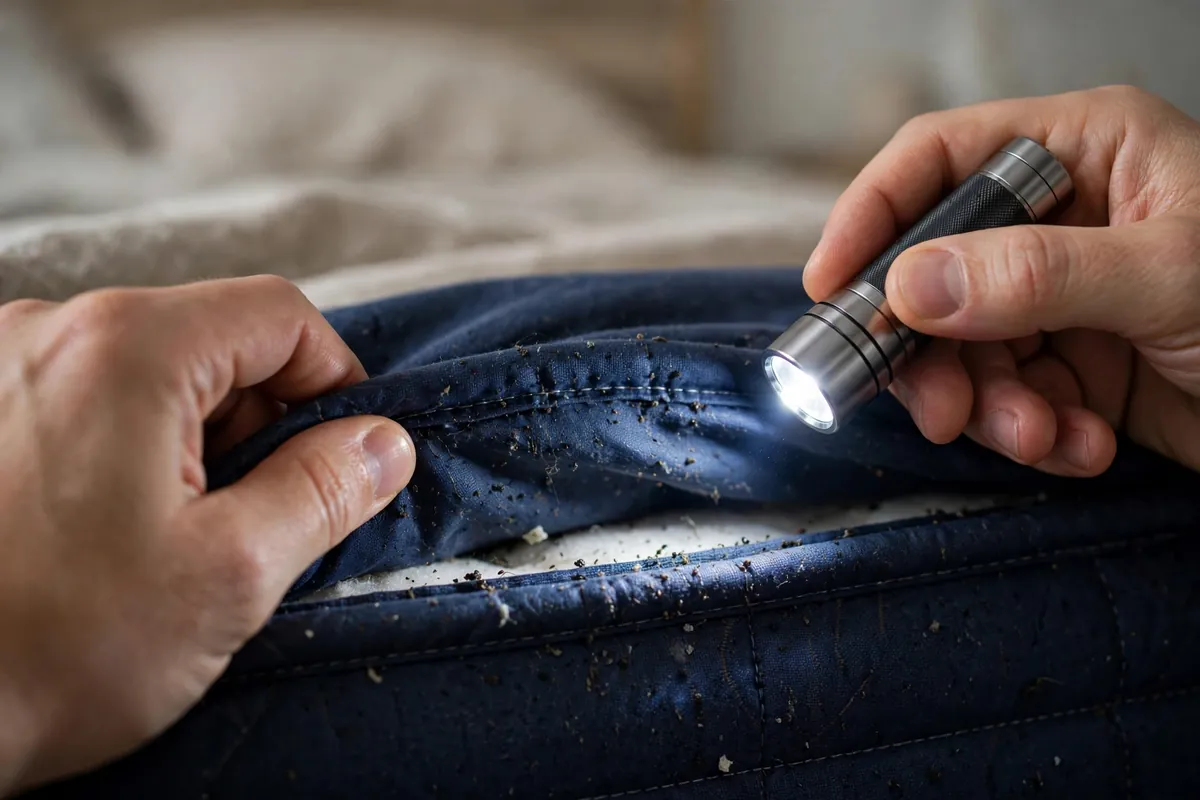
What you are looking for: live bugs the size of apple seeds, reddish brown and flat. Dark ink-like fecal spots clustered in seams. Translucent shed skins. Tiny white eggs, about the size of a pinhead, cemented into crevices. Any one of these is a dealbreaker.
What to Bring for the Inspection
A few simple tools turn a glance into a real inspection. Pack them before you head out.
A bright flashlight is non-negotiable. Phone flashlights work, but a dedicated flashlight with a focused beam is better for peering into dark crevices. Bed bugs avoid light, so you will often spot them scurrying when the beam hits. A magnifying glass helps with eggs and young nymphs, which are nearly invisible to the naked eye.
Bring a flat tool like an old credit card for probing seams, and your phone to photograph anything suspicious for a closer look later.
The Step-by-Step Inspection
Work systematically. Start with the outside and move inward, checking every seam and joint before you decide.
Step 1: The once-over. Look at the whole piece in good light. Stains, damage, or a musty odor are worth noting, but a clean appearance proves nothing. This step just sets your baseline.
Step 2: Seams and piping. Run your fingers slowly along every seam, feeling for bumps or grit that could be fecal spots or eggs. Shine the flashlight into the seam as you go. On sofas, pull the cushions and check the deck underneath, the arm interiors, and the back where it meets the seat.
Step 3: The underside. Tip the piece or get low. Lift the dust cover edges and peer inside with the flashlight. Check where legs meet the frame. On dressers and nightstands, pull every drawer, inspect the tracks, and flip the drawers to check their undersides.
Step 4: Mattress specifics. If it is a mattress or box spring, check the binding all the way around, every tuft, and all four corners. Press along the seams and watch for movement. A box spring deserves the same attention underneath, especially the wooden frame inside.
Step 5: Decide. Clean means you found nothing: no bugs, no spots, no skins, no eggs. Anything else means walk away, no matter how good the piece looks. A secondhand armchair is not a good find if it leads to a heat treatment for the whole house.
Which Pieces Carry the Most Risk
Not all used furniture is equal. Upholstered sofas, armchairs, and mattresses sit at the top of the risk list because they combine endless hiding spots with the human contact bed bugs want. These deserve the most thorough inspection, and honestly, mattresses from unknown sources are rarely a good idea.
Wooden case goods, dressers, nightstands, bookshelves, sit in the middle. Fewer hiding spots, but joints and drawer tracks still harbor bugs. A careful inspection usually settles the question. Headboards deserve extra attention since they sit against the bed.
Solid metal, glass, or hard plastic pieces are the safest bets. A quick visual check is usually enough for these.
After You Buy: Precautions Before It Comes Inside
A clean inspection is great, but a little paranoia is good insurance. Before the piece enters your living space, give it a precautionary once-over in the garage or on the lanai.
Vacuum every seam, crevice, and joint with a crevice tool, then empty the vacuum outside immediately. For upholstered pieces, a pass with a handheld steamer along the seams kills anything the vacuum missed. Heat is the enemy of bed bugs at every life stage, which is why professional heat treatment is the gold standard when an infestation is confirmed.
For the first few weeks, keep an eye on the area around the new piece. A simple interceptor trap under the legs catches any stragglers and gives you early warning. If you spot anything, isolate the piece and call before the problem spreads. Catching it in one piece of furniture is a minor incident. Catching it after it reaches the bedroom is a project.
The thrift store circuit in Naples will keep turning, and most of it is perfectly safe. A ten-minute inspection is all that stands between a great find and a very bad month. Make it a habit, and buy with confidence.
Secondhand Furniture Questions, Answered
Adults yes, they are apple-seed sized and reddish brown. Eggs and young nymphs are much harder to spot. That is why inspection focuses on the signs they leave behind: dark fecal spots, shed skins, and tiny white eggs tucked into seams.
If the inspection was clean, a precautionary heat treatment or a thorough vacuuming with a crevice tool is reasonable. If you found any live bugs or suspicious signs, do not bring it in. Treat it outside or leave it behind.
Upholstered pieces and mattresses top the list because they offer endless hiding spots. Wooden furniture with joints and screw holes comes next. Solid metal or plastic pieces are the lowest risk.
They can survive months without feeding, and a garage rarely gets hot enough for long enough to kill them. Do not count on storage conditions to solve the problem. Inspect regardless of where the piece was kept.
Isolate the piece immediately, ideally in a garage or sealed room, and do not move it through the house. Vacuum it thoroughly outside if possible, then call for a professional inspection before the bugs spread to other rooms.
Some do a visual check on intake, but no store can guarantee a piece is clean. Policies vary widely and turnover is fast. Treat every secondhand piece as uninspected and do your own check before buying.
Found Something Suspicious? Do Not Bring It Inside
Dark spots, shed skins, or live bugs on a secondhand piece mean stop. Call before it crosses your threshold and we will tell you what you are looking at.
Naples thrift stores are full of treasures. A flashlight, ten minutes, and the checklist above keep the treasures from bringing friends home. Inspect first, buy confident, and sleep easy.
Suspect Bed Bugs in Your Storage Unit? Get Confirmation
Call, email, or stop by: a real specialist answers, not a call center.