Bed Bug Eggs in Naples: Why One Treatment Is Rarely Enough
November 7, 2026
You treated the bugs you could see, and a week later they are back. The culprit is almost always the eggs: tiny, glued into seams, and untouched by the first visit. Here is why beating them takes more than one round.
Why Eggs Survive the First Treatment
You did everything right. The treatment happened, the technician left, and for a few days the bites stopped. Then, a week or two later, a fresh line of bites shows up on your arm, and a tiny bug turns up on the headboard. It feels like the treatment failed. It probably did not. What you are seeing is the second wave, the one that was already in the house as eggs when the first visit happened.
Bed bug eggs are the reason one treatment is rarely enough, in Naples or anywhere else. They are tiny, glued into seams and crevices, and built to survive. Most treatments kill the bugs you can see. The eggs wait out the treatment, hatch on their own schedule, and start the whole problem over again. Beating them is not about a stronger first visit. It is about timing the follow-up to catch what hatches.
Where Eggs Hide in a Naples Home
A female bed bug lays one to five eggs a day, and she glues each one into place with a sticky coating that hardens like cement. The eggs go where the bugs live: mattress seams and piping, the tufts and buttons of an upholstered headboard, the joints of a wooden bed frame, the folds of curtains near the bed, and the clutter piled up beside it. In Naples condos, where bedrooms are compact and furniture sits close to the bed, the hiding places are dense and close together.
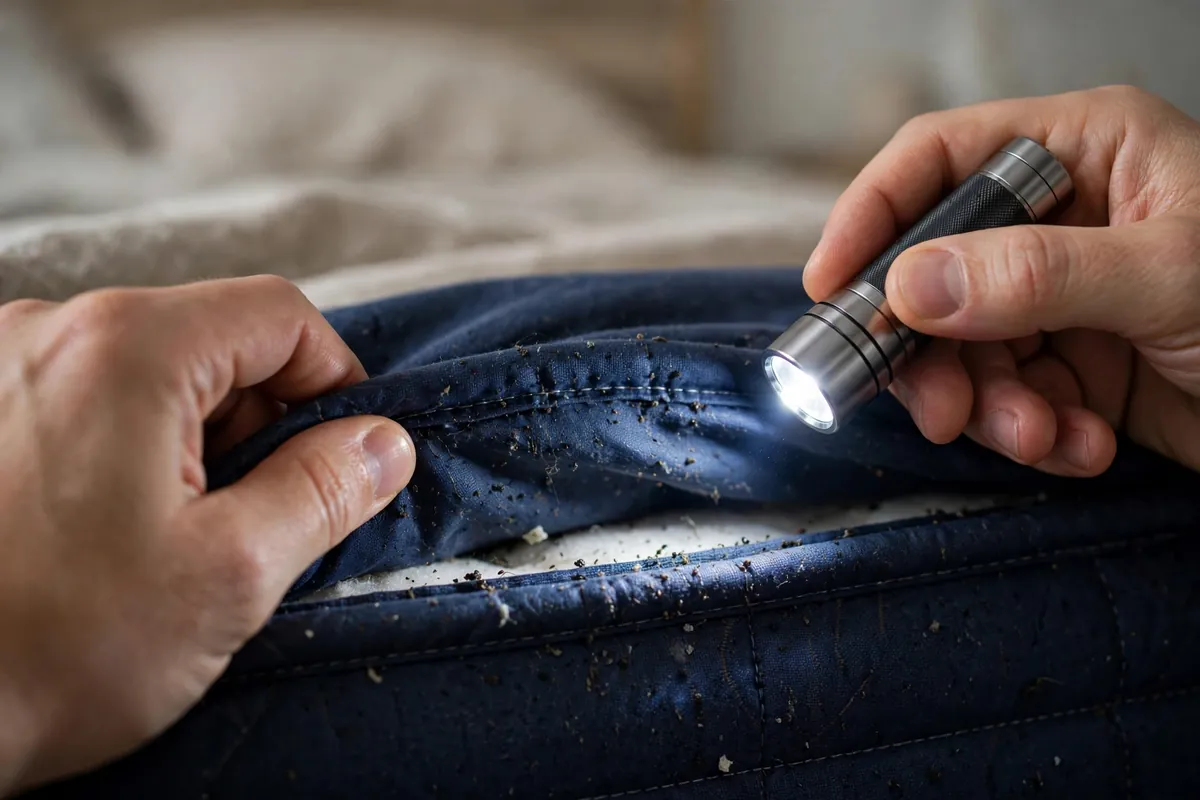
The eggs themselves are almost invisible without help. Each one is about the size of a pinhead, pearly white, and shaped like a tiny grain of rice. On a white mattress seam, they blend in completely. On dark wood, they look like specks of dust. A flashlight and a magnifying glass help, but even a careful look misses some, which is why a professional bed bug inspection uses trained eyes and better tools than a homeowner's flashlight. Our guide to inspecting secondhand furniture covers the same hiding places, because eggs hitchhike on used furniture just like live bugs do.
The glue matters as much as the hiding place. Eggs cemented into a seam do not fall out when you shake the bedding or run the vacuum over it. Vacuuming removes some, but the ones tucked deep in a fold or a screw hole stay put. That is why the first treatment rarely gets them all, and why the follow-up exists.
The Hatching Timeline
Under Naples conditions, warm and humid most of the year, bed bug eggs hatch in about six to ten days. Heat speeds the process up. In a bedroom that stays in the high seventies, which describes most Naples homes in November, the hatch comes fast. Each egg releases a nymph, a pale, tiny version of an adult, that needs a blood meal within days to keep growing.
That timeline is the whole story of the second wave. A treatment on day one kills the live bugs. The eggs sit through it. Six to ten days later, the first nymphs emerge, hungry, and they start feeding at night. Two weeks after treatment, you see fresh bites, and it looks like the treatment failed. It did not. The eggs simply ran their course, which is why a single visit, no matter how thorough, cannot close the case on its own.
The nymphs grow fast. With regular feeding, a nymph becomes an adult in about five weeks, and the females start laying eggs of their own. That is the window that matters. Catch the new generation before it starts laying, and the infestation ends. Miss it, and the cycle restarts from the beginning. This is also why the signs of bed bugs in Naples condos are worth knowing: fresh fecal spots and shed skins after a treatment mean nymphs are active, not that the original bugs survived.
What Follow-Up Visits Actually Do
A proper treatment plan is built around the hatch. The first visit kills the live population and treats the harborages. The follow-up, usually two to three weeks later, is timed to land after the eggs have hatched but before the new nymphs mature and start laying. The second visit kills the hatch, and a third check confirms nothing is left.
The follow-up is not a repeat of the first visit. The technician checks the places where eggs were found, looks for fresh signs, and treats the new nymphs where they are feeding. For heat treatment, the follow-up may be a smaller, targeted application. For chemical treatment, it is a second application on the same harborages, catching the nymphs that were eggs last time. Our heat treatment page and our chemical treatment page explain how each method handles the egg problem, because they handle it differently, and the plan depends on the method.
Some companies sell a single visit and walk away. That is the least thorough option and the worst one, because the eggs guarantee a return. A plan with follow-ups takes more visits and ends the problem. Ask any company how many visits the plan includes and what happens if bugs show up after the last one. The answer tells you whether they understand the egg problem or are hoping you do not.
What You Can Do Between Visits
There is useful work to do between visits, and it is mostly about not giving the new nymphs anywhere to hide. Keep the bed isolated: mattress encasements on the mattress and box spring, bed legs in interceptor traps, bedding kept off the floor. Encasements do not kill eggs, but they trap any bugs and eggs already on the mattress inside, where they cannot feed, and they make the next inspection much easier. Our mattress encasements page explains how they fit into the plan.
Launder bedding and clothing on high heat and dry on high heat, which kills every life stage, eggs included. Declutter the bedroom, especially the piles beside the bed, because clutter is harborage, and every extra hiding place makes the follow-up harder. Vacuum the mattress seams and the bed frame every few days and empty the vacuum outside. And keep watching: fresh bites, new fecal spots, or a nymph in an interceptor trap all tell the technician where the hatch is happening.
What not to do matters too. Do not spray store-bought bug spray between visits. It can scatter the bugs into new hiding places and interfere with the treatment. Do not move infested furniture into another room, which spreads the problem. And do not throw the mattress out in a panic. A treated mattress with an encasement is easier to manage than a new mattress in a room where eggs are still hatching. If you are unsure, a K9 bed bug detection visit can pinpoint where the remaining activity is, so the follow-up goes exactly where it needs to.
Bed Bug Egg Questions, Answered
About six to ten days in a warm Naples home. Heat speeds hatching up, so eggs in a bedroom that stays in the high seventies hatch at the fast end of that range. That is why follow-up visits are usually scheduled two to three weeks after the first treatment.
Barely. Each egg is about the size of a pinhead, pearly white, and glued into seams and crevices. On a white mattress they blend in completely. A flashlight helps, and a magnifying glass helps more, but even a careful look misses some.
Yes, when the heat reaches them. Bed bug eggs die at the same temperatures as live bugs, but the heat has to penetrate into the seams, folds, and clutter where eggs hide. That is why preparation matters: the room needs to be ready so heat reaches every harborage.
Because eggs from before the treatment hatched. The treatment killed the live bugs, but the eggs survived and released nymphs six to ten days later. Fresh bugs two weeks after a visit are almost always the hatch, not survivors, and the follow-up visit is timed to catch them.
They help contain them. An encasement traps bugs and eggs already on the mattress inside, where they cannot feed, and it makes the next inspection easier. It does not kill eggs elsewhere in the room, so it works best as part of a treatment plan, not on its own.
When follow-up inspections find no live bugs, no fresh fecal spots, and no new shed skins over several weeks, and interceptor traps stay empty. Two clean follow-ups in a row is the usual sign the cycle is broken.
Still Seeing Bugs After Treatment? Do Not Wait
New bugs after a treatment usually mean eggs hatched, not that the treatment failed. Call before the new generation settles in and we will check what hatched and what comes next.
Bed bug eggs are small, stubborn, and patient, and they are the reason the first treatment is the beginning of the job, not the end of it. Plan for the hatch, keep the follow-ups, and the second wave never gets a chance to become a third. Naples bedrooms stay warm all year, and so does the egg clock. Beat it by being on time.
Suspect Bed Bugs in Your Storage Unit? Get Confirmation
Call, email, or stop by: a real specialist answers, not a call center.