Bed Bugs in Naples Hotels: How to Check Your Room and Keep Them Out of Your Luggage
November 18, 2026
You check into a Naples hotel, drop your bags, and head straight for the beach. Nobody wants to spend the first ten minutes inspecting a mattress. But bed bugs travel the way guests do, from room to room and city to city, and the ten minutes you spend on arrival are the cheapest insurance against bringing one home in your suitcase.
Why Naples Hotels See Bed Bugs, Even the Nice Ones
Naples hotels turn over fast. Guests arrive from airports all over the country, stay three nights, and leave, and the next guest arrives before the room has cooled. Every suitcase is a possible carrier, and every stay is a chance for a bug to walk off one bag and onto a headboard, then onto the next guest's bag a day later. The hotels along Gulf Shore Boulevard and Vanderbilt Beach see this traffic all year, and the winter season, when snowbirds and holiday visitors stack up, makes it heavier still. Volume, not cleanliness, is what drives the risk.
That is the part most travelers get wrong. Bed bugs are not a dirt problem, and a high room rate is not protection. A well run hotel catches problems faster because housekeeping is trained to spot the signs, but no hotel can inspect every seam between every guest. The bug that reaches your room probably arrived in someone else's luggage that morning, and it does not care how nice the lobby is. Our guide on how bed bugs get into your home covers the same habit on the house side: they travel in things, not on people, and a suitcase is the perfect vehicle.
The Ten Minute Room Check on Arrival
Start before you unpack anything. Put your luggage in the bathtub or on the bathroom tile, where a stray bug has nowhere to hide and nothing soft to cling to. Then pull the flashlight on your phone and work the room in one order, so you do not skip a spot: headboard first, then mattress seams, then the box spring, then the nightstand. Ten minutes, one pass, every stay. It feels fussy the first time. By the third stay it is as automatic as checking the view.
What you are looking for is small but visible. Live bugs are the size of an apple seed, flat, and rust colored. Shed skins look like pale empty shells in the same shape. Dark spots along a seam are droppings, and they smear when touched with a damp cloth, which separates them from ordinary dirt. Our guide to the signs of bed bugs shows what each one looks like, and our post on what bed bug bites look like is worth a read before the trip, because bites alone are easy to mistake for mosquito bites after a beach evening.
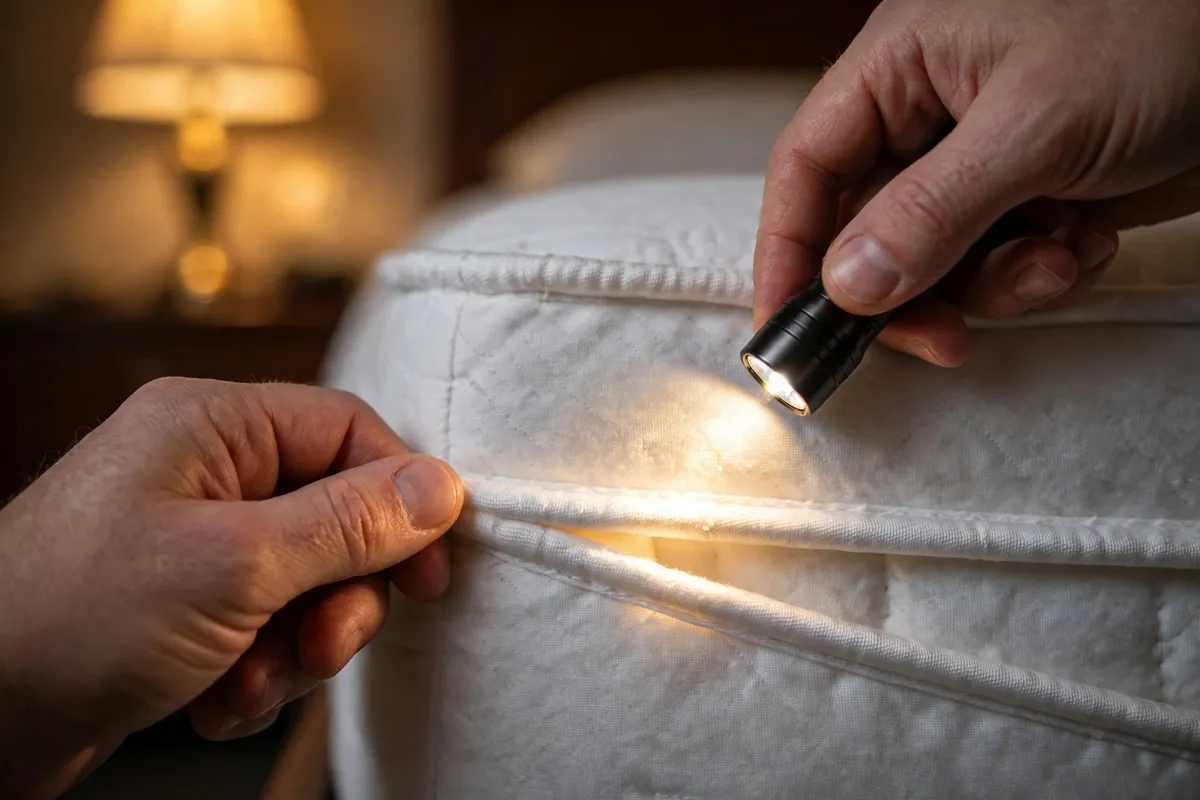
Headboard, Mattress Seams, and the Luggage Rack
The headboard is the first stop because it is the closest hiding spot to a sleeping person. Pull it gently away from the wall if it moves, and check the back, the joints, and the screws where the frame meets the wall. Wooden headboards with carving and slats hide bugs in every groove, and upholstered headboards hide them in the button tufts and the seam where the fabric meets the frame. If the headboard is bolted to the wall, check the seam along the wall and the gap behind it with the flashlight.
Then the mattress. Pull the bedding back, lift the mattress corner, and run the flashlight along the piping and the seams, especially at the corners and along the side facing the headboard. Check the box spring the same way, including the fabric underside and the wooden frame corners. The nightstand comes next: drawer joints, the underside, and the seam where the top meets the sides. The luggage rack deserves a look too, along the straps and the joints, since it is where your bags will live. Hotels that take this seriously use K9 bed bug detection for Naples hotels to check rooms a human eye would miss, and mattress encasements seal the seams where bugs hide, which makes the next check faster for everyone.
Where to Put Your Bags While You Stay
Keep your bags on the luggage rack, in the middle of the room, away from the bed and the wall. Never put a suitcase on the bed, even for a minute while you grab something, and never leave bags on the floor overnight. The floor is where a bug that fell off the bed frame waits, and a suitcase on the floor is an open invitation. Hang clothes in the closet rather than draping them over a chair, and keep dirty laundry in a sealed bag inside the suitcase, not in a pile on the floor.
Re-check once during a longer stay, especially if you notice bites or spots that were not there on arrival. A quick pass over the headboard and mattress seams takes two minutes once you know the spots, and catching a problem on night three beats discovering it at home a week later. The same routine applies to vacation rentals and condos, where turnover is just as fast and housekeeping checks vary more. Our Marco Island vacation rental bed bug guide follows the same check for rental stays, and the bed bug prevention tips for Naples travelers cover the packing habits that make the whole routine easier.
Unpacking at Home Without Bringing Hitchhikers Back
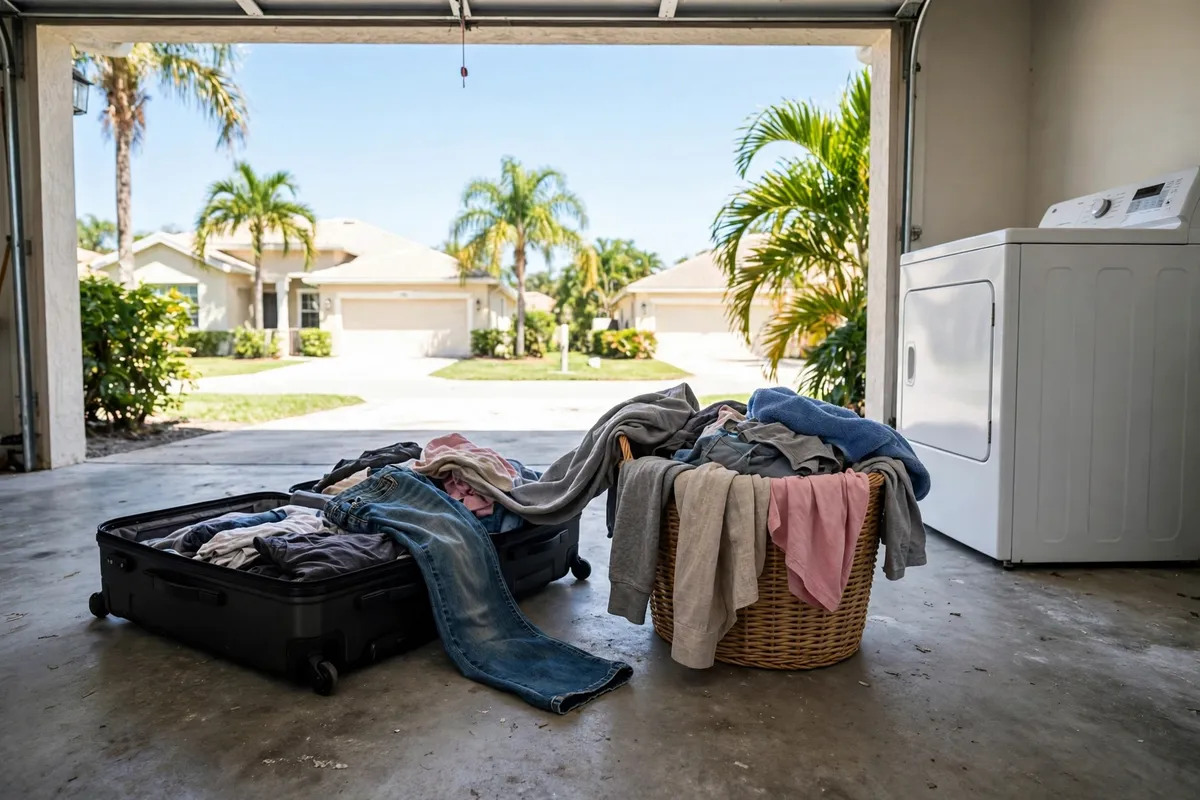
The trip is not over when you pull into the driveway. Unpack in the garage, on a hard floor, away from bedrooms: suitcase open, clothes straight into the washer, and the bag itself inspected seam by seam with a flashlight before it goes anywhere near a closet. Wash clothes on a hot wash and a hot dryer cycle, which kills bugs at every stage, and bag anything that cannot be washed until you can check it properly. Vacuum the suitcase inside and out, including the zipper tape and the small pockets, then store the bag in the garage, not under the bed.
This routine matters because a bug that survives the trip home can wait a long time for its next meal. Our post on how long bed bugs survive without feeding explains why an empty suitcase in a closet is not automatically safe, and our guide to bed bugs in Naples cars and RVs covers the other ride home: the car trunk and back seat that carried the bags from the hotel. Check the car too, along seat seams and the trunk lining, before you call the trip done.
What to Do If You Find Signs in a Naples Hotel
If you find a live bug, skins, or dark spots, take a clear photo first, then keep your luggage closed and away from the bed. Tell the front desk calmly, with facts: what you found, where, and when. Ask for a room that is not next door, above, or below the affected room, because bed bugs travel through wall voids and along pipes. Do not spray the room, do not move bags to the new room yourself without checking them, and do not keep quiet to avoid a fuss. A good hotel wants to know, and an early report protects the next guest as well as you.
Back home, run the full unpacking routine even if the rest of the stay felt fine, and check the bed at home over the next few weeks. If signs show up at home, take a photo, keep the evidence in a sealed bag, and arrange a bed bug inspection to confirm what you found. Residential bed bug treatment covers the home side, and heat treatment handles rooms where bugs have settled in. Our account of finding bed bugs in a Bonita Springs hotel shows how one report, handled the right way, stopped a hotel find from becoming a home problem. The check you do on arrival is the infestation you never have to explain.
Hotel Questions, Answered
Yes. Bed bugs follow luggage, not dirt, and a busy hotel with guests arriving from everywhere gets more introductions than a quiet one. Good housekeeping catches problems faster, but no hotel is immune, and a room that was clean yesterday can pick up a bug from a guest today. Check the room no matter what the rate was.
About ten minutes once you know the routine. Luggage goes in the bathtub first, then the headboard, mattress seams, box spring, and nightstand get a flashlight pass. The first time is slower because you are learning what to look for. After a few stays it becomes habit, and it is the best ten minutes of any trip.
No. The bed is the one place bed bugs are most likely to be, and a suitcase on the bed gives them a direct path into your luggage. Use the luggage rack in the middle of the room, or the bathtub while you check. Keep bags off the bed and off the floor for the whole stay.
Look for live bugs the size of an apple seed, pale shed skins, and tiny dark spots along mattress seams, headboard joints, and nightstand corners. The dark spots smear when touched with a damp cloth. Blood spots on sheets and a musty, sweet odor in a heavy infestation are later signs, and any one of these is enough to ask for a different room.
Yes, easily. A bug tucked into a suitcase seam can survive weeks without feeding, and eggs in a zipper pocket hatch after you are home. That is why the unpacking routine matters as much as the room check: unpack in the garage, wash clothes hot, and inspect the suitcase seams before the bag goes back in a closet.
Take a clear photo, keep your luggage closed and away from the bed, and tell the front desk calmly with the facts. Ask for a room that is not next door, above, or below the affected room. Do not spray the room or move bags to another room yourself, and run the full unpacking routine at home even if the hotel stay felt fine after the move.
Back From a Naples Hotel Stay? Get Your Home Checked
Back from a hotel stay and worried about hitchhikers? Get your home checked before a bug from a suitcase settles into a bedroom. A discreet inspection answers the question fast.
Bed bugs do not care how nice your Naples hotel was. They care about seams, warmth, and a still sleeper, and every hotel room offers all three, from the resorts off Gulf Shore Boulevard to the inns near Fifth Avenue South. Check the room on arrival, keep the bags on the rack, and unpack in the garage. The bug you catch at the headboard is the infestation you never have to explain.
Found Signs After a Hotel Stay? Get It Checked
Call, email, or stop by: a real specialist answers, not a call center.