How Long Can Bed Bugs Survive Without Feeding in a Naples Home
November 9, 2026
You locked the condo in May and you are not back until November. Nobody has slept in the bed for six months. It feels safe to assume the bed bugs starved. That assumption is exactly how they win.
Why an Empty Home Does Not Mean a Safe Home
Every spring, the same conversation happens in Naples. A snowbird locks up a condo in Pelican Bay or a house in North Naples, flies north for the summer, and assumes six empty months will finish off any bed bugs left behind. It is a reasonable guess, and it is wrong.
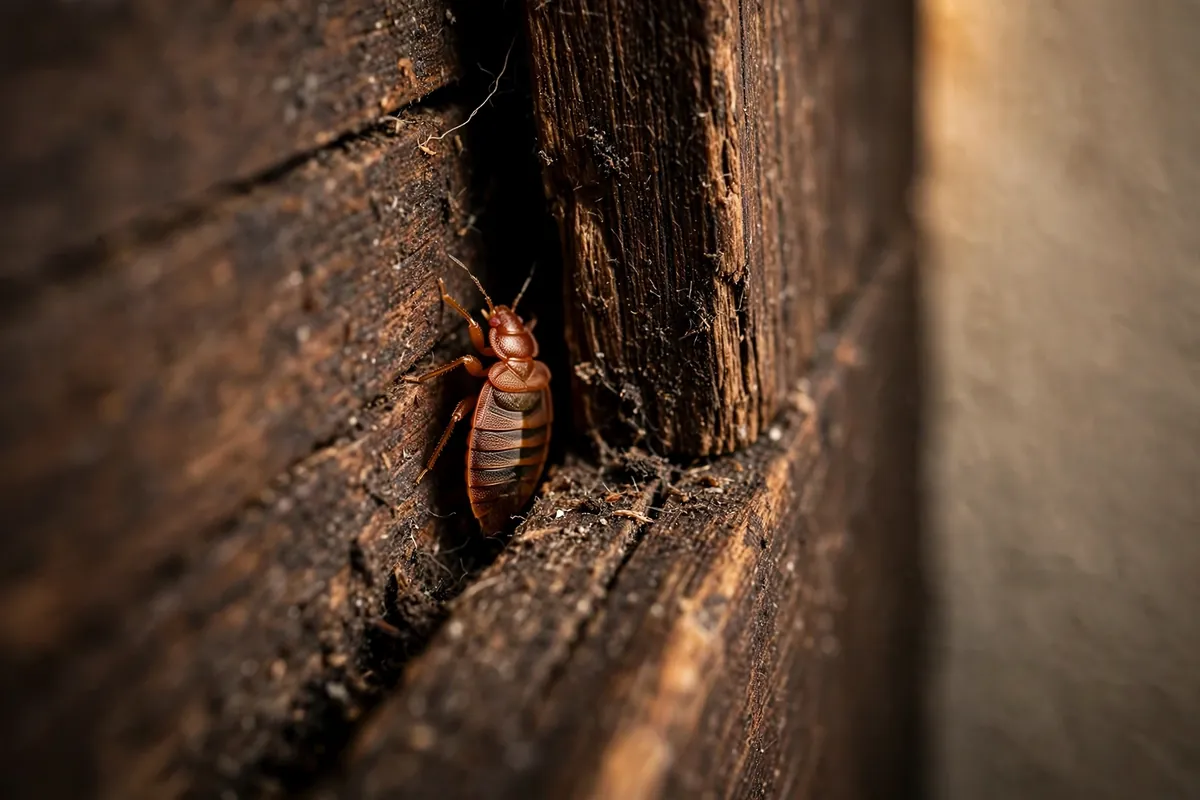
Bed bugs are built to wait. They are flat, patient insects that tuck into cracks thinner than a credit card and slow their bodies down when no host is near. They do not roam the house looking for food. They sit, hidden and still, in the dark seam of a mattress or the joint of a headboard, and wait for the warmth that tells them a sleeper is back. In Naples, the climate helps them. Warmth and humidity keep them from drying out, which is the real killer during a long fast.
The Starvation Timeline, Stage by Stage
Adults are the marathon runners. A well fed adult can commonly survive four to six months without a blood meal in warm conditions, and in a cool, humid, undisturbed hiding spot, some stretch toward a year. They are larger, they store more energy from their last feed, and they can lower their activity to a near standstill. An adult that fed the night before you left in April can still be alive when you unlock the door in October.
Nymphs have a shorter clock. Young bed bugs are smaller, they dry out faster, and they need regular meals to molt and grow. Most nymphs last weeks to a few months without feeding. A home that sat empty all summer will have fewer young bugs than it started with. But the adults carry the infestation through, and a single fed female can lay eggs once she feeds again.
Eggs play a different game. Eggs do not feed at all, so starvation does not apply to them. They sit glued into cracks and seams, waiting for warmth to hatch, usually in one to two weeks in warm conditions. Even if every adult and nymph in a room died during the summer, eggs laid in the spring can hatch after your return. That is why our guide on bed bug eggs in Naples homes stresses follow up visits. One empty summer does not end the story when eggs are involved.
Why Naples Warmth Helps Them Wait Longer
Bed bugs die during a fast mostly by drying out, not by running out of energy. That is why humidity matters as much as temperature, and why Southwest Florida is such a forgiving place for a waiting bed bug. A Naples home in August, even with the air set to the high 70s or low 80s, holds far more moisture in the air than a heated house in a northern winter. The bug loses water slowly, and the wait is easier.
A Naples home almost never gets hot enough to kill them on its own. Our guide on whether bed bugs survive Florida heat explains why. The inside of a mattress, a wall void, or a closet stays shaded and stable while the afternoon sun bakes the driveway. Many seasonal homes are also set to a warm hold temperature for the summer, often in the low to mid 80s, to control humidity. That is a comfortable waiting temperature for a bed bug.
The Snowbird Trap: Six Quiet Months
Picture a condo in Lely or a golf community home in North Naples. The owners leave in late April after a winter of guests and rental turnovers. Maybe a guest brought bed bugs in a suitcase in March and nobody noticed. The owners lock up, set the air high, and fly home. For six months, nothing happens.
That silence is the trap. No bites for six months does not mean no bugs. It means no host. The bugs are dormant in the headboard and the nightstand, waiting for the signals that say someone is sleeping nearby again. The owners return in November, fall into bed exhausted after a travel day, and wake up to bites. By then the bugs have fed, and a fed female can start laying eggs within days. Build the bed bug check into the reopening routine, before the first night, not after the first bites. A bed bug prevention plan with a scheduled return inspection puts the check on the calendar instead of leaving it to memory after a long travel day.
Where They Wait While You Are Gone
A waiting bed bug picks a spot that is dark, tight, close to the bed, and stable. In a Naples home, that usually means the mattress seams and piping, the underside of the box spring, the joints where the headboard meets the frame, the nightstand drawer tracks, and the baseboards behind the bed.
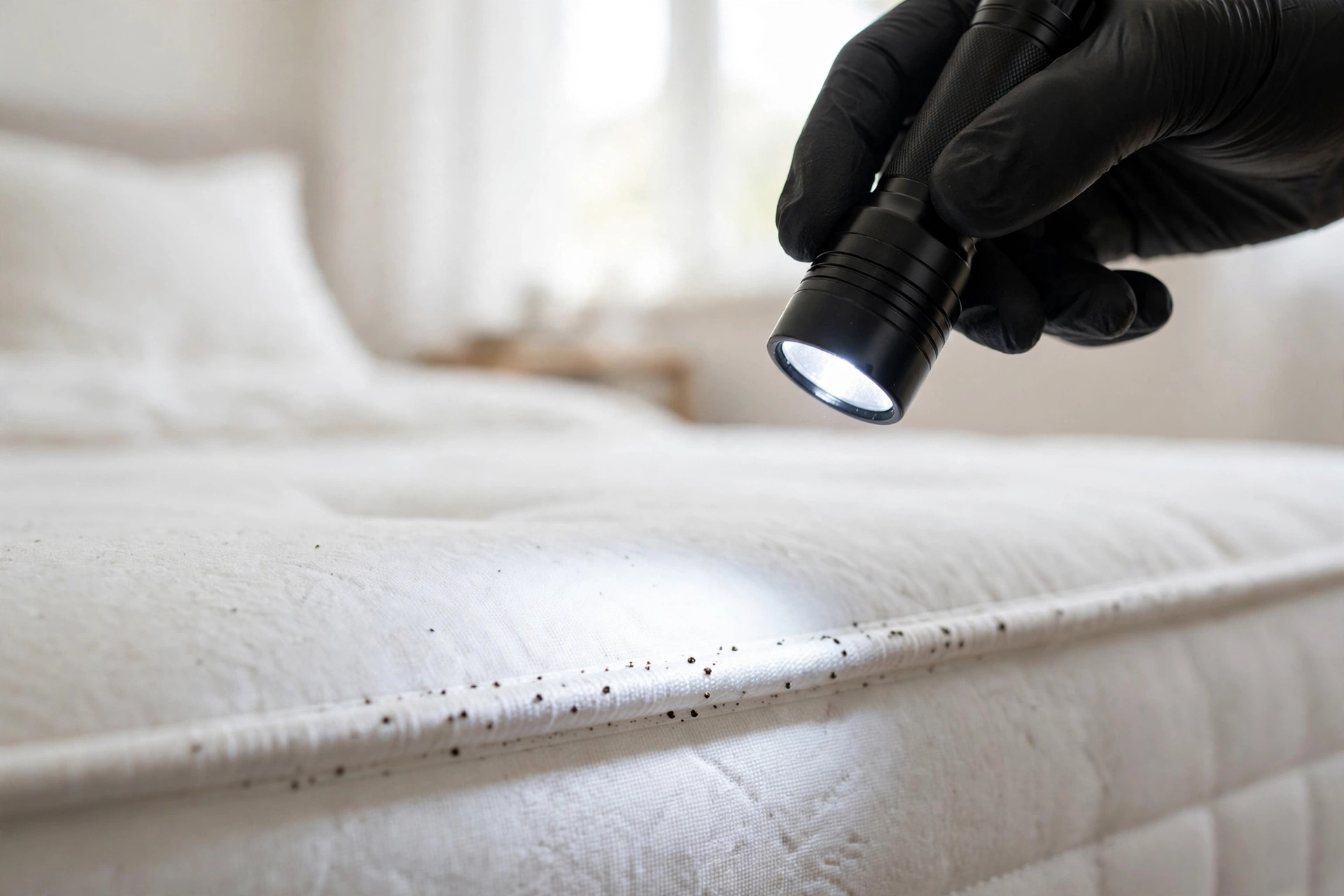
What you are looking for after a long empty stretch is not always a live bug. Look for the signs they leave behind: tiny dark spots that smear when touched with a damp cloth, pale shed skins in seams, and tiny white eggs glued into cracks. A room can look spotless and still hold a waiting population, because the bugs spend the empty months in places no cleaning crew reaches. A K9 bed bug detection visit can sweep the bedrooms in minutes and find bugs hidden in spots a flashlight cannot reach.
Do not forget the luggage and storage side of the story. Bags that sat in a closet all summer, linens stored in a spare room, and items that came out of a storage unit can all hold waiting bugs. Our guide on bed bugs in Naples storage units covers what snowbirds should check, and the same rule applies at home.
The Return Check: What to Do Before the First Night
Do the check on arrival day, in daylight, before you unpack. Pull the bed a few inches from the wall and run a flashlight along the mattress seams, the headboard joints, and the nightstand. Look for live bugs, shed skins, and dark spots. Put interceptor traps under the bed legs if you have them, and keep the bed away from the wall for the first week. Wash the bedding you plan to sleep on in hot water and dry it on high heat.
If you find signs, do not start moving furniture to other rooms. Moving infested pieces spreads the problem to clean rooms, and it makes the inspection harder. Isolate what you found, keep it in the bedroom, and call for a professional bed bug inspection before you sleep in the room. If the inspection confirms bugs, heat treatment is a strong option for a seasonal home, because it treats the room in one visit and reaches the eggs and the deep hiding spots that waiting bugs favor.
Even if the check comes back clean, keep watching for the first two weeks. Check the mattress seams once a week, keep the interceptors in place, and note any bites that appear in a line or a cluster. The signs of bed bugs in Naples condos can be subtle at first, especially in shared wall buildings. Two clean weeks with empty traps and no fresh signs is a good result.
Starvation Questions, Answered
Adults commonly survive four to six months without a blood meal in a warm home, and some stretch toward a year in a cool, humid, undisturbed hiding spot. Nymphs last weeks to a few months. Eggs do not feed, so they wait and hatch when conditions turn favorable.
Probably not. Six empty months will thin out the nymphs, but well fed adults can ride out the whole summer in a warm, humid Naples home, and eggs can hatch after your return.
Not at the temperatures a closed Naples home reaches. The inside of a mattress, wall void, or closet stays shaded and stable while the outdoors bakes. Only controlled, verified heat treatment reaches the temperatures that kill them.
It is possible in the best conditions for the bug: cool, humid, dark, and completely undisturbed. It is not the usual outcome. Most Naples returns happen after four to six months, which sits inside the normal adult survival window.
Check the mattress seams and piping, the headboard joints, the nightstand, and the baseboards behind the bed, with a flashlight, in daylight, before you unpack. Look for live bugs, shed skins, dark spots that smear, and tiny white eggs. Wash bedding on hot and keep interceptor traps under the bed legs for two weeks.
Do not move furniture to other rooms, because that spreads the problem. Isolate what you found, keep it in the bedroom, and call for a professional inspection before you sleep in the room.
Coming Back to Naples? Check First, Sleep Second
Returning to a home that sat empty all summer? Get the bedrooms checked before the first night, and start the season with a clear answer instead of a surprise.
Bed bugs do not need your home to be occupied. They need it to be occupied again, once. They will wait out a summer in a headboard joint in Park Shore, a mattress seam in Pelican Bay, or a nightstand drawer in Old Naples, patient and still, until the bed is slept in again. The check takes an hour on arrival day.
Returning to an Empty Naples Home? Get It Checked
Call, email, or stop by: a real specialist answers, not a call center.