Bed Bugs in Naples Offices: How They Spread at Work and What to Do
November 13, 2026
Nobody expects bed bugs at work. There is no mattress, no headboard, no bedroom. But bed bugs do not need a bed. They need a seam, a bag, and a ride, and a busy office gives them all three by nine in the morning.
How Bed Bugs Reach an Office Without a Bed
Start with the part most people get wrong. Bed bugs are not a bedroom pest. They are a hiding pest. They feed at night, but they will feed in the daytime too if a person sits still long enough, and an office chair holds a person still for hours. A single bug tucked into a coat lining can ride the elevator up, crawl off onto a chair, and settle into a seam before lunch. No bed required.
Naples offices see this route more than most. Seasonal staff arrive from up north, consultants fly in for a week of meetings, and sales teams drive the corridor between Naples, Bonita Springs, and Fort Myers with sample bags and luggage. Every trip is a chance to pick up a bug, and every office visit is a chance to leave one behind. Our guide on how bed bugs get into your home covers the house side of the same habit: they travel in things, not on people.
Shared Chairs, Sofas, and Meeting Rooms Spread Them
The break room sofa is the office version of a hotel headboard. It is upholstered, it has seams and piping, it sits in a quiet corner, and a different person uses it every hour. Bed bugs settle into the seams and wait for the next sitter. Meeting room chairs run a close second, especially padded chairs that stay in the same room for years. Hot-desking makes it worse: when nobody owns a chair, nobody notices the first signs.
The spread is slow and quiet. A bug feeds, retreats to a seam, and lays eggs in the stitching. Weeks later, a second chair shows signs, then a third. Staff blame mosquitoes or dry skin, because nobody connects an office chair to a bed bug. Look for the same evidence you would look for at home: live bugs the size of an apple seed, pale shed skins, and tiny dark spots that smear. Our guide to the signs of bed bugs shows what each one looks like, and it works just as well on an office chair as on a mattress.
Lockers, Coat Hooks, and Bags Do the Carrying
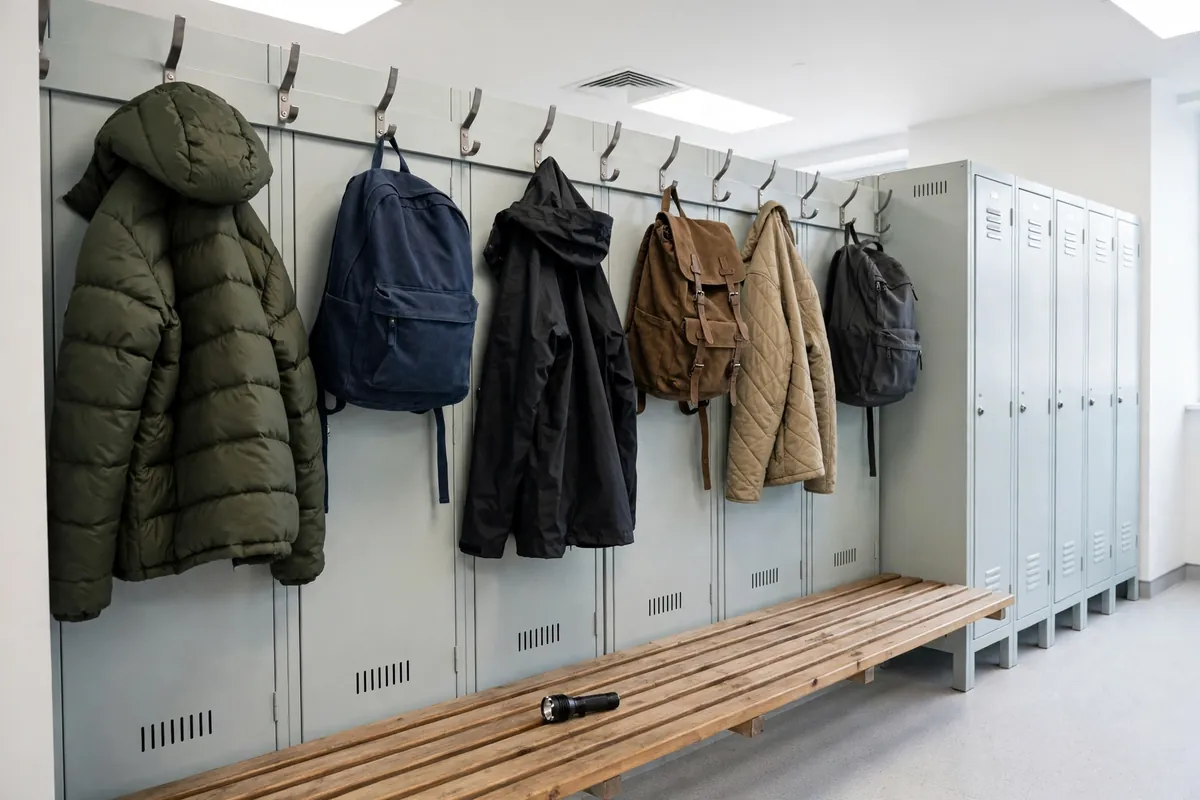
Coats are the main vehicle. A coat hangs against another coat on a shared hook, a bug walks from one lining to the other, and by the end of the day it is riding home in a different jacket. Lockers help when each person has their own, but shared cubbies and open coat racks do the opposite: they press everyone's belongings together for eight hours. Bags left on the floor pick up bugs the same way, especially tote bags and backpacks that sit against chair legs.
The fix is separation, not suspicion. Give coats their own hooks with space between them, keep bags off the floor and off shared chairs, and store personal items in a closed locker or a sealed bin when that is an option. Staff who travel should keep work bags out of the bedroom at home and check them after trips, the same routine our bed bug prevention tips for Naples travelers recommend. And if a bug turns up in a shared locker room, treat the whole row as suspect, not just one locker.
Commuting and Travel Bring Them Through the Door
The commute is the other half of the story. Rideshares, shuttles, and airport seats all carry the same risk as a hotel room, just in shorter visits. A bug picked up in a rideshare on Monday can be sitting in an office chair by Tuesday and in a car seat by Friday. The route runs both ways: bugs from an office ride home in a work bag, and bugs from a home ride into the office the next morning. Our post on bed bugs in cars and RVs follows the vehicle leg of that trip.
Season makes it sharper. From November to April, Naples fills with visitors, seasonal workers, and short-term rentals turning over weekly. Offices near Fifth Avenue South, the North Naples business parks, and the medical corridor off Immokalee Road all see more foot traffic, more travel, and more chances for a bug to change buildings. Bed bugs can also wait months without feeding, so a bug left in a vacant desk over the summer can still be there in the fall. Our post on how long bed bugs survive without feeding explains why an empty office is not a safe office.
What to Check at Your Desk and in Shared Rooms
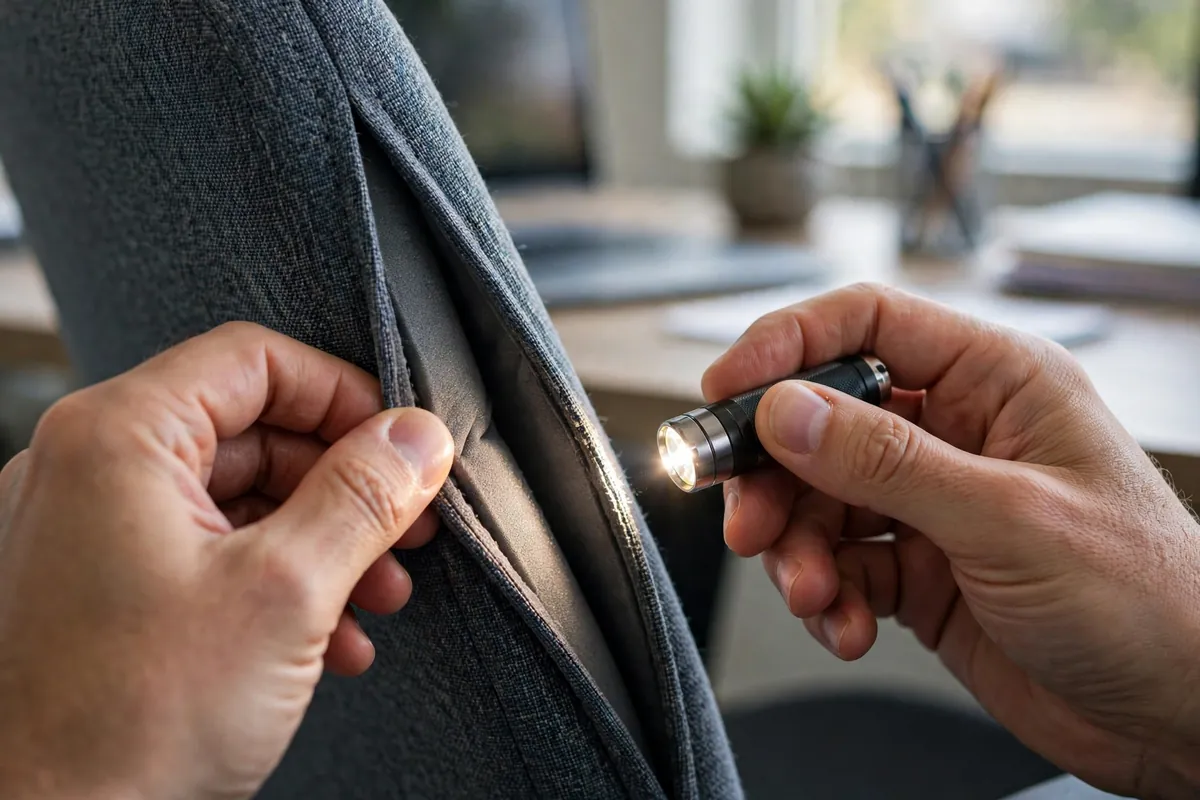
You do not need special tools for a first check. A flashlight and five minutes will do. Pull the seams of your chair open and look along the stitching, the piping, and the gap where the backrest meets the seat. Check the underside of the chair and the joints where the arms meet the frame. Then check the shared spots: the break room sofa seams, the waiting room chairs, and the coat hooks. Work slowly. Bed bugs are flat, still, and easy to miss in a quick glance.
If you find something, do not squash it and move on. Take a clear photo, note the chair or room, and keep the evidence if you can: a bug in a sealed bag or a piece of tape is worth more than a description. Do not move the chair to another room, do not take cushions home to wash, and do not spray the area. Sprays scatter bugs into new hiding spots and make a professional check harder. A bed bug inspection can confirm what you found and map how far it has spread, and K9 bed bug detection can sweep a whole floor quickly when several rooms are in question.
What to Tell Facilities, and What Not to Do
Tell facilities the same day, with facts, not alarm. Say what you found, where, and when, and share the photo. A good report reads like this: one live bug on the break room sofa seam, found at lunch, photo attached. That gives facilities something to act on. Keep it private and practical. Bed bugs are not a hygiene problem, and no one should be blamed for carrying one in. The goal is a check, not a rumor.
Facilities should treat a credible report as a prompt for a discreet inspection, not a deep clean. Vacuuming the seams, checking nearby rooms, and scheduling a professional visit will do more than a round of spraying. For offices, hotels, and shared workspaces, commercial bed bug treatment covers the building side, and a bed bug prevention plan with scheduled checks keeps a one-time find from becoming a floor-wide problem. The offices that handle this well are the ones that act on the first bug, not the fiftieth.
Office Questions, Answered
Yes. Bed bugs need hiding spots and a nearby person, not a mattress. Chair seams, sofa cushions, and locker corners give them both, and office workers sit still long enough for daytime feeding. An office rarely supports a large infestation, but a small one can persist for months and spread to homes.
Through shared furniture and belongings that touch. A bug crawls from an infested coat to the coat beside it, from a bag on the floor to a chair seam, or from a break room sofa to the next sitter. They do not jump, fly, or live on people, so the spread follows the items, not the person.
Yes, the same day, with a photo and the location. Early reports lead to a quick check of one area. Waiting lets the bugs spread to more rooms and more homes, and makes the fix bigger. Bed bugs are not a hygiene issue, so report the facts without embarrassment.
Yes. Bags that sit on the floor, against chairs, or in shared cubbies can pick up a bug or eggs. Keep your bag off the floor at work, check its seams and pockets after travel, and unpack it outside the bedroom when you get home.
Not usually. Carpet is too open and too disturbed for them. They prefer tight seams, stitching, and joints in furniture, plus the gaps behind baseboards and under chair frames. If carpet edges show signs, the furniture nearby is the likely source.
Take it seriously and keep it discreet. Photograph and preserve any evidence, check the reported area and nearby rooms, and arrange a professional inspection. Avoid bug bombs and broad spraying, which scatter bugs and complicate treatment. A scheduled prevention check after the visit keeps the office ahead of the next report.
Spotted Signs at the Office? Get It Checked
Found a bug on a chair, a sofa, or a coat hook at work? Get the office checked before it rides home with someone. A discreet inspection answers the question fast.
Bed bugs do not care that your office has no beds. They care about seams, warmth, and a still sitter, and Naples offices offer all three, from the break room in East Naples to the meeting rooms off Immokalee Road. Check the chairs, separate the coats, and tell facilities on the first sign. The bug you report today is the infestation you never have to explain tomorrow.
Found Signs in Your Car or RV? Get It Checked
Call, email, or stop by: a real specialist answers, not a call center.